Fractional CFO in Rockford, IL: Cost & Guide
A plain-English guide to fractional CFO services for Rockford and Northern Illinois organizations: what it costs, the signals that say you need one, and how a typical engagement actually runs.


Most owners we meet in Rockford don't have a profit problem. They have a visibility problem. The business is making money, the team is busy, and yet nobody can answer a simple question with confidence: how much cash will we actually have in ninety days, and can we afford the next hire, the next location, the next piece of equipment? That gap, between being profitable and knowing your numbers, is the gap a fractional CFO closes. This guide walks through what one costs in Rockford and Northern Illinois, the signals that say you're ready, and exactly how an engagement works, so you can decide without a sales pitch.
Key takeaways
A fractional CFO gives Rockford and Northern Illinois organizations senior financial leadership part-time, typically $3,000 to $10,000/month on a retainer or roughly $150 to $400/houra fraction of a full-time CFO's $200K+ all-in cost.
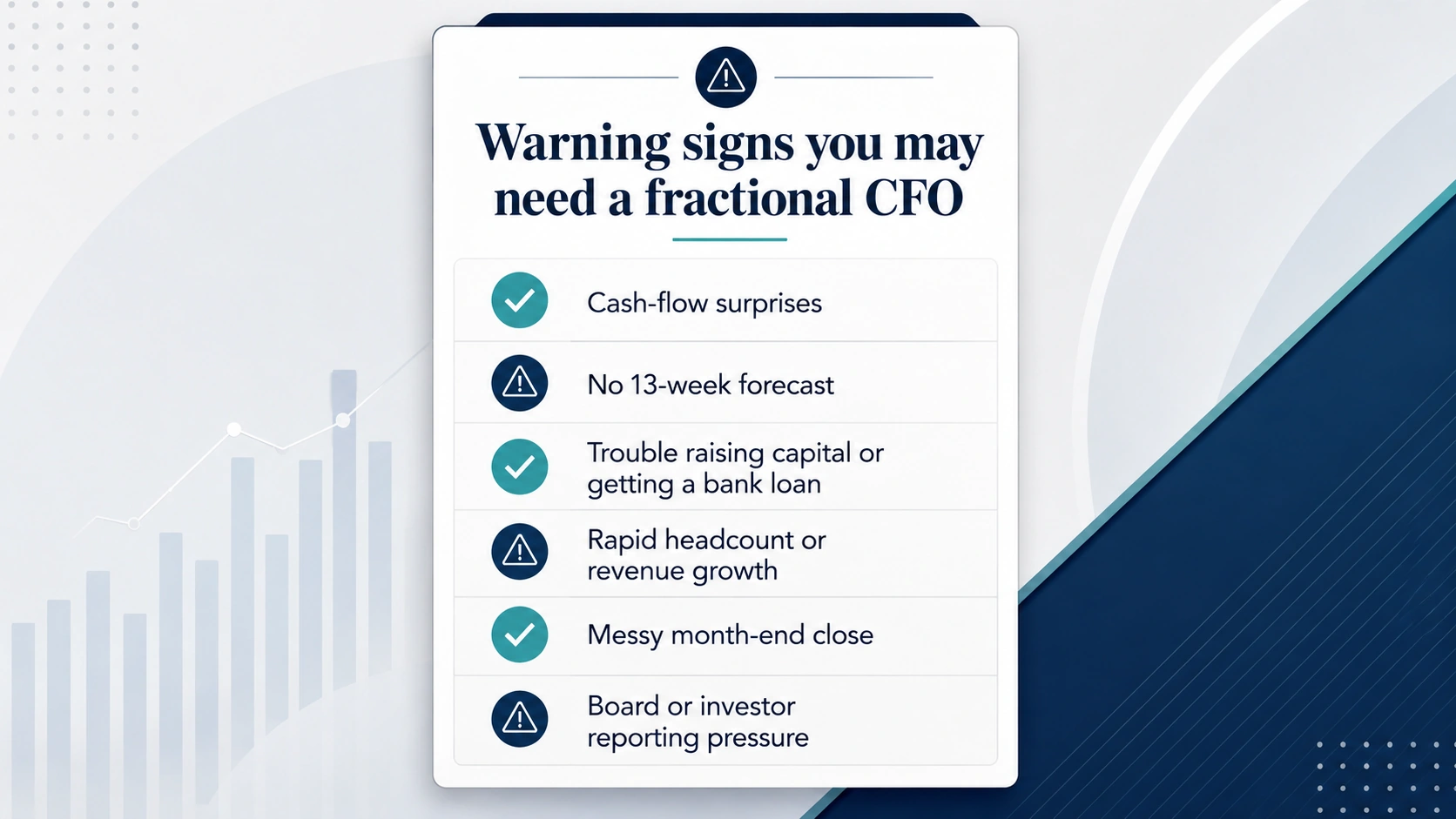
You're usually ready for one when revenue outgrows your bookkeeping, cash flow turns unpredictable, you're raising capital or adding a location, or your board or lender wants forward-looking reporting instead of just historicals.
Engagements normally run in three phases: a financial diagnostic and cleanup, then reliable reporting and cash forecasting, then strategic work like budgeting, pricing, and growth planning.
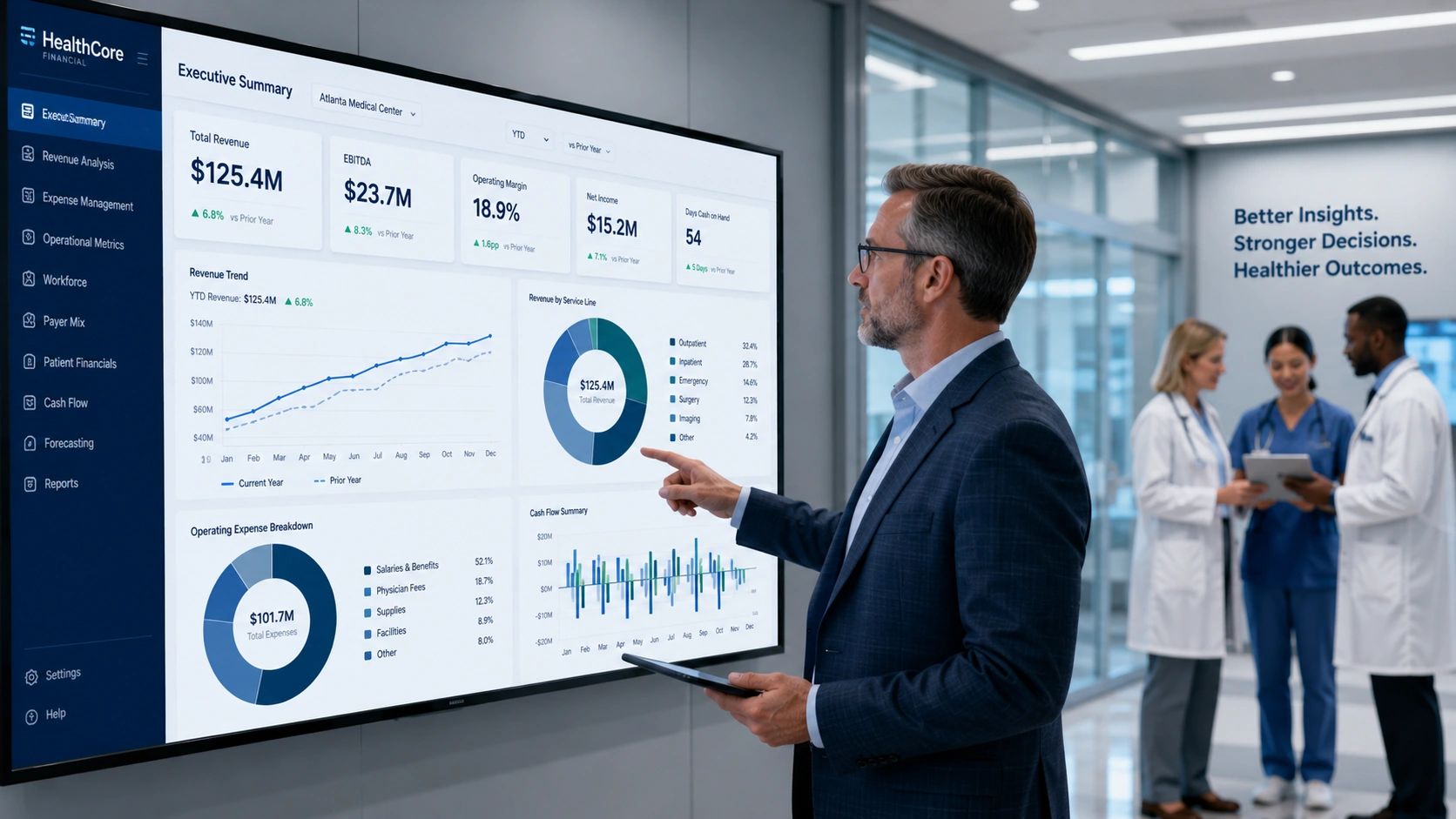
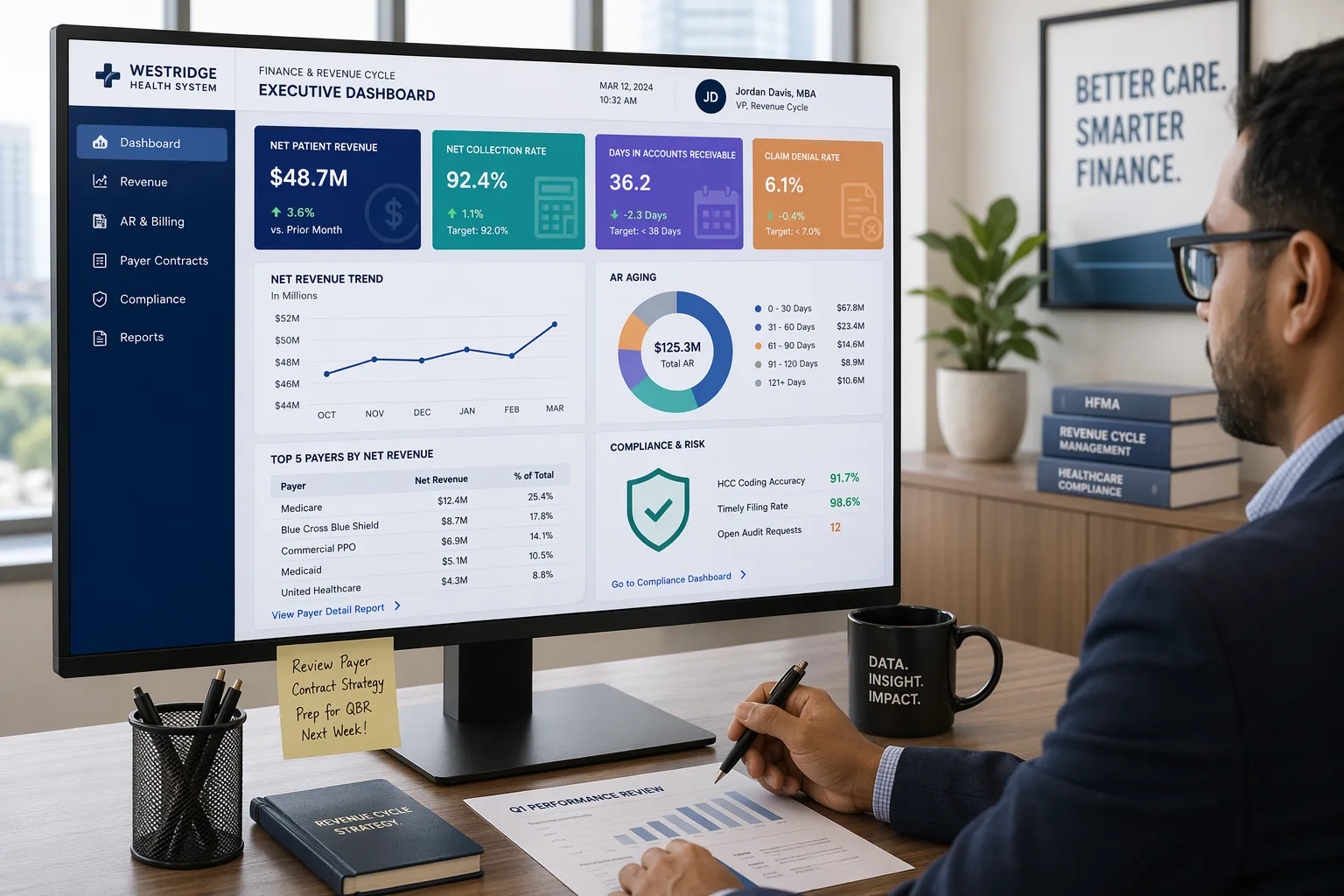
Healthcare practices benefit most, because payer mix, reimbursement timing, and multi-location growth make cash flow and KPI reporting unusually complex.
What is a fractional CFO?
A fractional CFO is an experienced chief financial officer who works with your organization part-time, a set number of hours or days each month, instead of as a full-time hire. You get the strategic horsepower of a senior finance leader: cash forecasting, budgeting, pricing strategy, capital planning, and the board- and lender-ready reporting that comes with it. The difference is that you pay only for the slice of time you actually need, and you can dial it up or down as the business changes.
It helps to be clear about what a fractional CFO is not. They're not a bookkeeper who also gives advice, and they're not a temp filling a seat until you hire someone permanent (that's an interim CFO, a different arrangement). A fractional CFO is an ongoing strategic partner who happens to work part-time. For most small and mid-sized organizations across Rockford and the Rock River Valley, that's the difference between flying blind on spreadsheets and steering with real numbers, without committing to a six-figure salary before the business can carry it.
In our experience, the owners who get the most from a fractional CFO are the ones who've outgrown "the bookkeeper sends me reports" but aren't yet large enough to justify a full-time finance executive. That's a wide band, and it covers a lot of growing Northern Illinois businesses.
Fractional CFO vs. controller vs. bookkeeper vs. full-time CFO
These roles are layers, not substitutes, and confusing them is the single most common mistake we see. A bookkeeper records what happened, invoices, bills, payroll entries, and keeps the day-to-day ledger clean. A controller owns accurate books, the monthly close, and compliance; their job is to make sure the rear-view mirror is trustworthy. A CFO looks through the windshield instead: strategy, forecasting, capital, and the decisions that shape where the business goes next. A fractional CFO delivers that CFO layer part-time.
The practical upshot: hiring a fractional CFO rarely means firing anyone. Most growing organizations keep their bookkeeper or controller for the day-to-day and add a fractional CFO on top for direction. You're adding a layer of strategy, not replacing your bookkeeping.
What does a fractional CFO cost in Rockford and Northern Illinois?
In this market, most fractional CFO engagements run $3,000 to $10,000 per month on a retainer, or roughly $150 to $400 per hour for project-based work. A light-touch engagement, monthly reporting, a quarterly forecast, and a standing strategy call, sits near the bottom of that range. A heavier one, weekly cash management, lender reporting, and an active expansion or financing project, sits near the top. Pure project work, like building a budgeting model or preparing for a bank loan, is usually quoted as a fixed fee.
Two things are worth saying plainly. First, Northern Illinois pricing tends to run below Chicago and well below coastal markets for comparable experience, which is one of the quiet advantages of hiring locally. Second, the cheapest quote is rarely the best value, a fractional CFO who costs $4,000 a month and finds $40,000 in trapped cash or mispriced services has paid for a year of fees in a single engagement.

What drives the price up or down
The quote moves with complexity, not vanity metrics. Several things push it up: multiple locations or legal entities that have to be consolidated; a heavy or shifting payer mix in a healthcare practice; a live ERP migration; weekly rather than monthly reporting; and any active financing, acquisition, or expansion that needs modeling. Things that pull it down: a clean single-entity business, books that are already in good shape, and a quarterly reporting cadence. The honest rule of thumb is that you're paying for hours and complexity, so the better organized your books are going in, the more of your budget goes to strategy instead of cleanup.
Fractional vs. full-time CFO: the total-cost comparison
A full-time CFO in this region typically costs $200,000 or more once you add base salary, bonus, payroll taxes, and benefits, and that's before recruiting fees or the risk of a bad hire. A fractional CFO delivers comparable senior expertise for the hours you actually use, which for most growing organizations lands somewhere between $40,000 and $120,000 a year. Just as important, the cost flexes with you: you can scale up during a capital raise or an expansion and scale back down once things stabilize, something a salaried hire can't do. That's why most small-to-mid organizations start fractional and only move to a full-time CFO when the workload genuinely, consistently justifies a dedicated executive.
When do you need a fractional CFO? (the signals)
There's no single revenue line that flips the switch, but there are signals. If three or more of the ones below sound familiar, you're usually past the point where bookkeeping alone is enough, and waiting tends to cost more than acting, because the problems that bring owners to a CFO (cash crunches, mispriced work, a stalled financing deal) are cheaper to prevent than to fix.
Signals for small / single-location practices and startups
At the small end, the signs are usually about confidence and cash. Money feels tight even in months you know were profitable. You can't answer "how much runway do we have?" without opening three spreadsheets and guessing. You're about to make your first real commitment, a key hire, a lease, a financed equipment purchase, and you want to know the business can carry it before you sign. Or tax time keeps producing surprises because nobody is looking forward, only backward. A few focused hours a month from a fractional CFO often replaces that anxiety with a simple rolling forecast you can actually trust.
Signals for growing group practices and mid-market organizations
In the middle, often once revenue pushes past roughly $2 to 3M, the signals shift from cash anxiety to decision quality. The monthly close drags on for weeks, so by the time you see the numbers they're stale. Pricing and staffing decisions get made on instinct because there's no clean view of margin by service line or location. You've added people faster than you've added financial structure, and the reporting hasn't kept up. This is the stage where a fractional CFO pays for itself fastest, because the organization is big enough that small percentage improvements in pricing or cost control translate into real dollars.
Signals for multi-location groups and regional enterprises
At the larger end, the triggers are usually structural. You're consolidating multiple locations or legal entities and the numbers don't tie out cleanly. A bank or board wants forward-looking financials, budgets, forecasts, covenant tracking, not just last quarter's actuals. An acquisition, a new service line, or a major expansion is on the table and you need someone who can model the downside, not just the optimistic case. Even organizations large enough to eventually warrant a full-time CFO often bring in a fractional one first, to build the reporting backbone and define the role before they hire for it.
How a fractional CFO engagement works, step by step
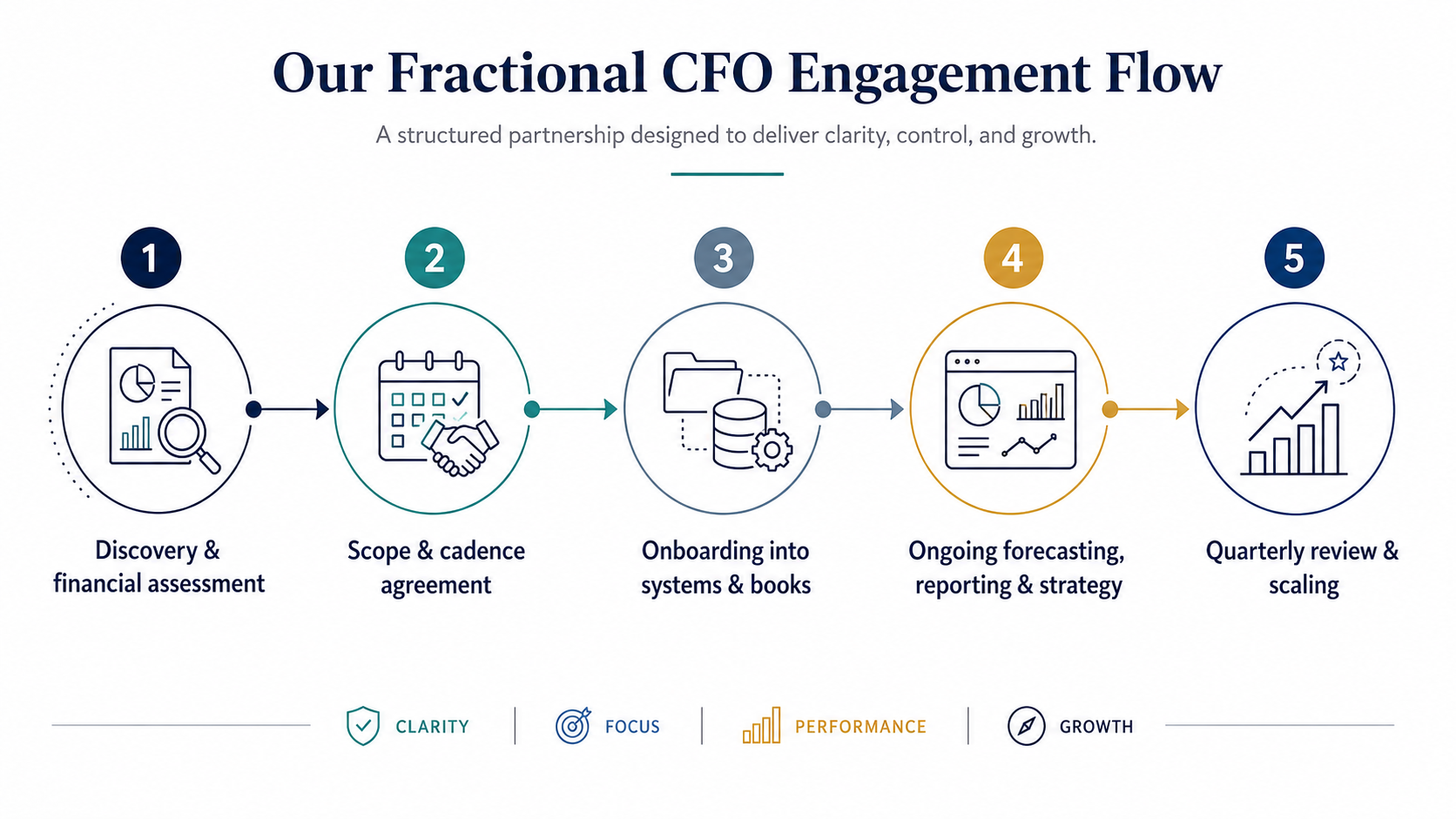
A good engagement isn't open-ended consulting, it's a defined arc with a clear cadence. While every organization is different, most move through the same three phases, and knowing them up front helps you judge whether a prospective CFO actually has a plan.
Phase 1, financial diagnostic and cleanup
The first few weeks are about getting the books trustworthy. That means a real look at the chart of accounts, how revenue and costs are categorized, where the close breaks down, and which numbers leadership currently can't rely on. In our engagements we see the biggest early wins here, because a surprising number of "profit problems" turn out to be reporting problems, margin that looks thin only because costs are miscategorized, or cash that looks scarce only because receivables aren't being tracked. You can't forecast on a shaky foundation, so this phase comes first.
Phase 2, reporting, KPIs, and cash-flow forecasting
With clean books, the CFO builds the instruments leadership actually steers by: a tight monthly reporting package, the three or four KPIs that matter for your business, and, the one most owners feel immediately, a rolling 13-week cash-flow forecast. That forecast is what turns "I think we're okay" into "we'll dip toward our minimum in week nine, so let's tighten collections now." This is the phase where the engagement stops feeling like cleanup and starts feeling like a steering wheel.
Phase 3, strategic finance (budgeting, pricing, capital, growth)
Once the reporting runs on its own, the work turns strategic: an annual budget tied to real drivers, pricing analysis, capital and financing planning, and, when it's on the table, modeling an expansion, a new location, or an acquisition. This is where a fractional CFO earns the title, because the questions stop being "what happened?" and become "what should we do?" For organizations eyeing bigger moves, this phase often connects directly to broader healthcare finance transformation work.
Why healthcare practices in Rockford lean on fractional CFOs
Healthcare is where the financial math gets genuinely hard, which is why practices are among the most common fractional-CFO clients in our area. Payer mix quietly sets your margin ceiling, a practice heavy in lower-reimbursing payers can be busy and still struggle to fund growth. Reimbursement timing makes cash flow lumpy in a way most businesses never experience, with revenue earned weeks or months before it's collected. And every structural change, adding a provider, opening a second location, taking on a new contract, shifts the model overnight.
The Healthcare Financial Management Association (HFMA) tracks how reimbursement and revenue-cycle pressure squeeze practices of every size, precisely the pressure a finance-literate part-time leader is built to manage. A fractional CFO who understands healthcare reads those signals early: they watch payer mix as a margin gauge, build cash forecasts around reimbursement lag, and pressure-test an expansion before the lease is signed. It's a pattern we see across Rockford, Loves Park, Machesney Park, and the wider Rock River Valley, strong clinical practices held back by finance systems that simply never scaled with them. If you're weighing whether your practice needs this kind of leadership at all, our piece on why clinics and healthcare organizations need dedicated financial leadership is the right next read.
Choosing a fractional CFO in Northern Illinois (what to look for)
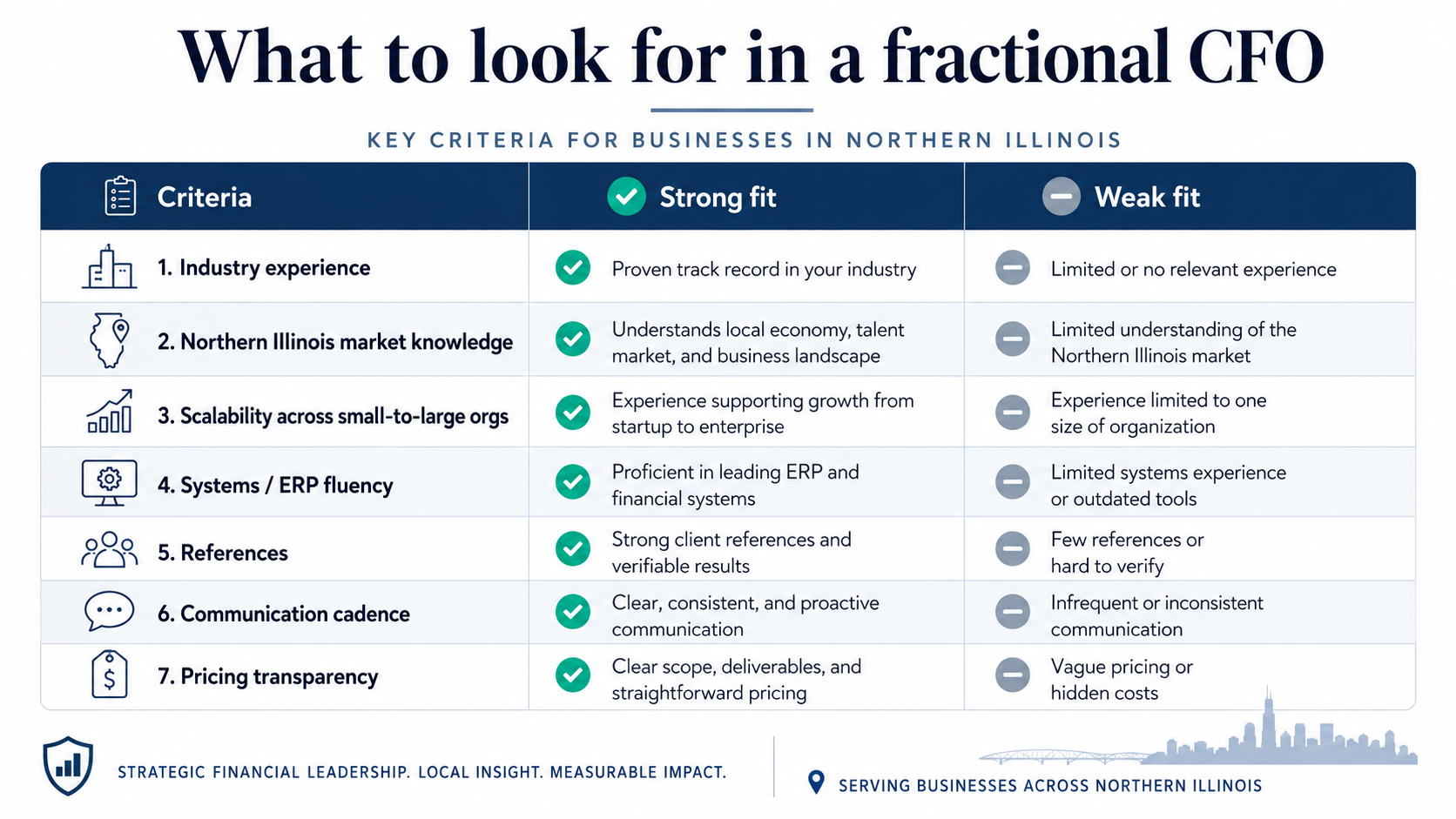
Not every fractional CFO is a fit for every organization, so weigh candidates against a few concrete criteria rather than a gut feeling. Look for real operating experience in organizations your size and shape, running finance for a 200-person enterprise is a different job than guiding a five-person practice. Look for fluency in your systems, or the ability to fix them; a CFO who can clean up your books and stand up proper reporting (and knows tools like NetSuite or Sage Intacct) is worth more than one who only consults from a distance. Insist on transparent pricing and a defined reporting cadence so you know exactly what you're getting each month.
Local knowledge matters more than people expect. A fractional CFO who already understands the Northern Illinois market, local lenders and their covenant expectations, regional labor costs, the rhythm of doing business here, starts with context instead of spending your first month (and your money) learning it. Ask for references from organizations like yours, and pay attention to how they communicate: the best CFOs translate finance into plain language a non-financial owner can act on. For a fuller view of the support a growing organization should expect, our guide to what growing organizations should expect from healthcare accounting services lays out the broader picture.
One last point: the right fractional CFO meets you where you are. Whether you're a solo practice just outgrowing spreadsheets, a mid-market group consolidating five ledgers, or a multi-location organization preparing for its next big move, small, medium, or large, a good engagement scales with you instead of forcing you into a one-size-fits-all package. That's the whole point of "fractional": you get exactly as much CFO as the business needs right now, and more when it grows.
Serving Rockford & Northern Illinois
Financial support for organizations of every size across Rockford & the Rock River Valley
Team Consulting 360 helps organizations across Rockford, Illinois and the surrounding region (Loves Park, Machesney Park, Belvidere, Rockton, Roscoe, Cherry Valley) and throughout Winnebago County and the wider Rock River Valley of Northern Illinois. From solo healthcare practices and small businesses to mid-market groups and large regional organizations, local teams face the same cost, payer, and reporting pressure as big-city systems, usually with a leaner finance bench, which is exactly where clean, scalable financial systems pay off fastest.
Organizations we work with: small, medium, and large
- Small: Solo & single-location practices, startups, and small businesses
- Medium: Growing group practices, clinics, and mid-market organizations
- Large: Multi-location medical groups, healthcare networks, and regional enterprises
Ready to move forward?
Let's build financial systems your team can trust
Book a free, no-pressure clarity call with Team Consulting 360, or grab our free finance-transformation guide. We'll help you see where your reporting, cash flow, and financial systems stand today , and map the fastest path to clean numbers and confident decisions.
Free 30-minute call · No obligation · Real answers
Frequently Asked Questions
How much does a fractional CFO cost in Rockford, IL?
What's the difference between a fractional CFO and a controller?
When does a healthcare practice in Northern Illinois need a fractional CFO?
How is a fractional CFO different from hiring a full-time CFO?
Can a fractional CFO work with our existing bookkeeper or accounting team?